
Introducing Community Cats
A game about helping stray cats

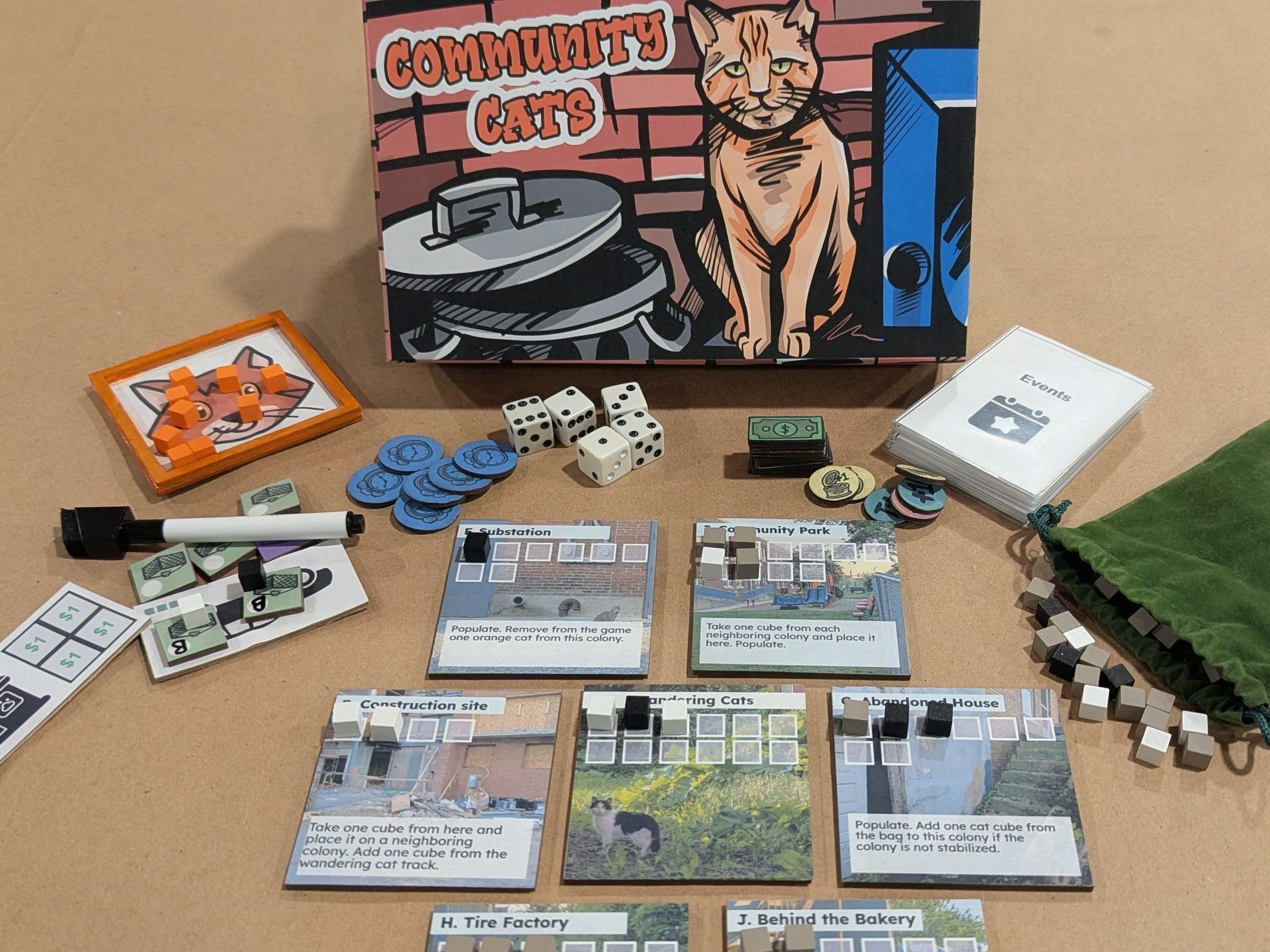
Community Cats puts you in the role of a rescuer facing a neighborhood overrun with stray cats. It’s your job to Trap-Neuter-Return (TNR) the cats to keep the population from spiraling out of control. I like to tell people: It’s like Pandemic, but with kittens! You feel a constant pressure to take control of a situation before it becomes unmanageable.
Where did the idea come from?
For those who know me, I’ve been involved in animal rescue for over a decade. I’ve fostered so many dogs and cats, I’ve honestly lost count. I also spent a few years involved in TNR work. I feel very strongly that we cannot adopt our way out of the overpopulation of cats, and that TNR has to be one of the tools. I really like to make games that help people learn something new. So it’s sort of natural that making a cat game only made sense, and TNR seemed to be something that’s not out there yet.
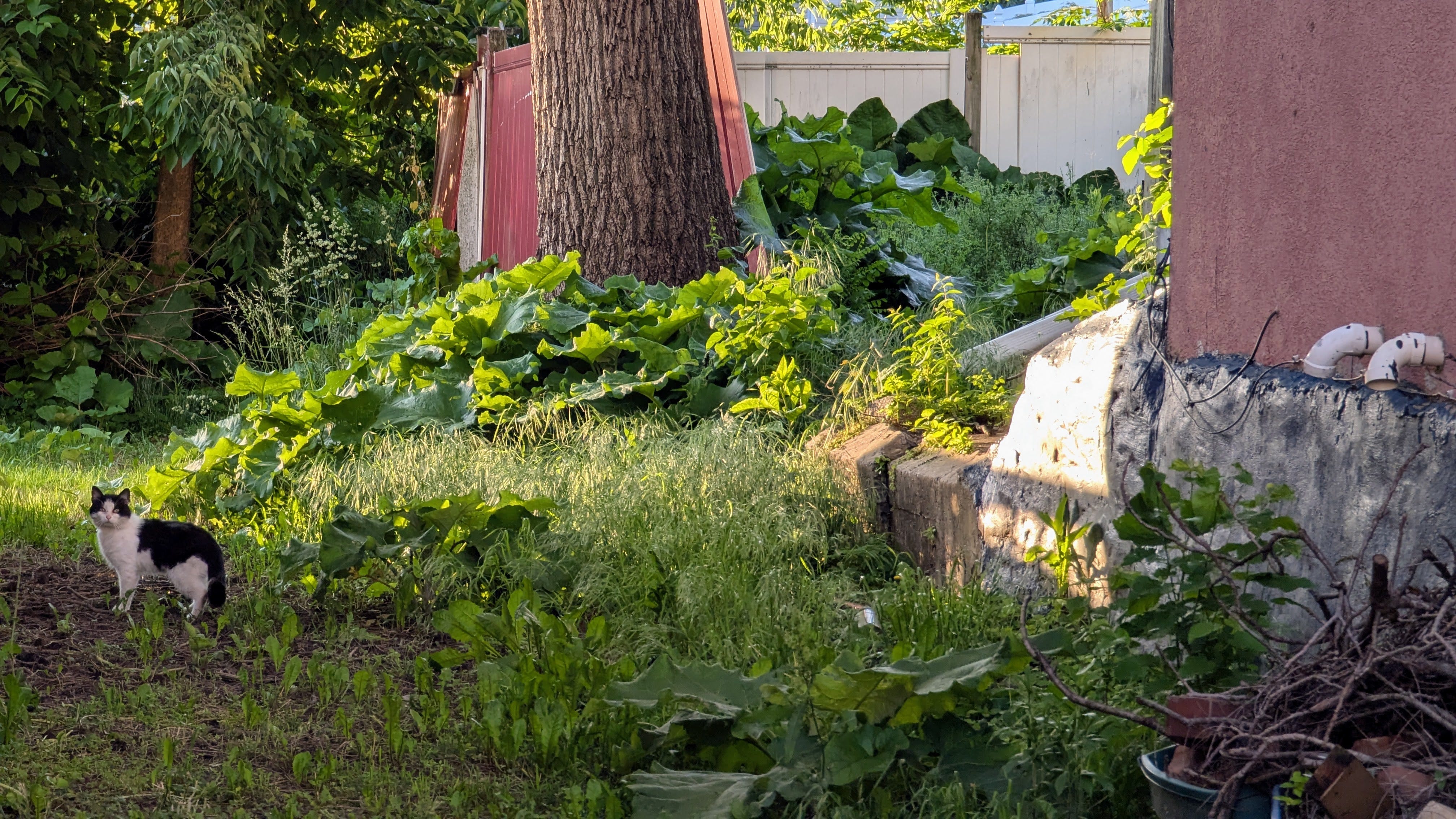
Another cat game?
I know there’s dozens of games out there. You can say, “You know that cat game...” and no one will know which you’re talking about because there are so many. However, I believe that Community Cats isn’t just a fun game with a cat theme put onto it. The real-world mechanics of it really drive the game. Every rule in the game exists for a very specific reason and as much as possible is true to real life situation. I lean into educating people on how it works, but still making an interesting and challenging game.
How’s it play?
Community Cats is a solo game. Each of the six cat colonies on the gameboard, plus the wandering cat track, begins with two cat cubes. At the end of each round, any colony with more than one cat that has not been trapped, neutered, and returned will gain a new cube. The player has ten rounds and five actions per round, represented by time tokens, to buy equipment, trap cats, and take them to the clinic. Money is limited to cover both upgrades and visits to the veterinarian clinic. Players roll dice equal to the number of traps they have to capture the cats in the colony. Event cards help the player along the way with benefits like extra traps, lines of credit, and a volunteer. Players win when all the colonies have been stabilized and can no longer produce new cat cubes. However, if they run out of cubes from the bag or the wandering cat track fills up, they will lose.
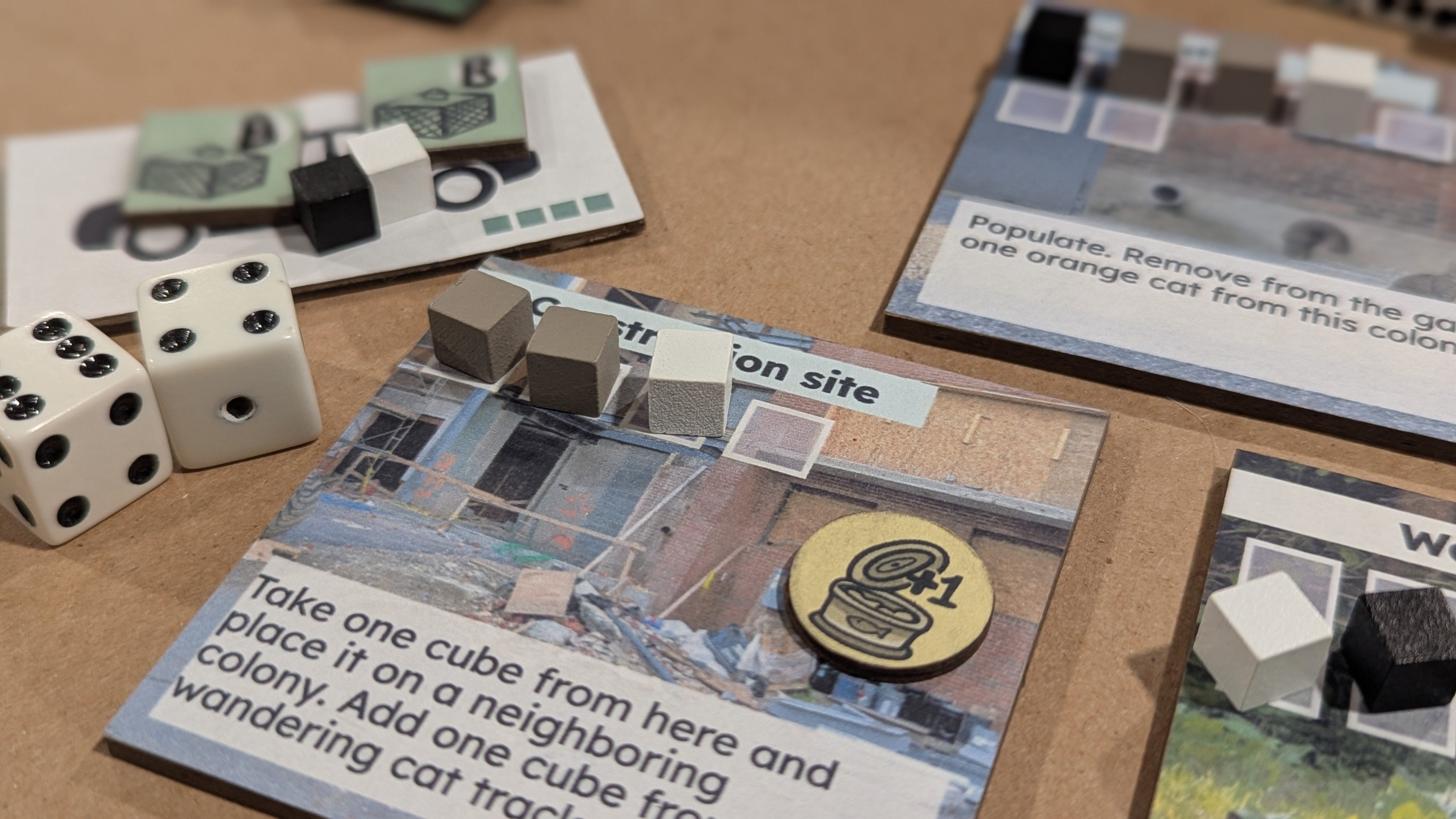
Where I’m at in development
I’ve been working on it for about 9 months now. I believe the core mechanics are solid. I probably need to get a few more playtests in with other people. Being a solo game, I’ve been able to play it a lot myself. However, the feedback from others is crucial. The main area I need to work on is determining the difficulty level. Since there are 11 different colonies, but only six are played each game, the difficulty fluctuates based on which colonies are used and where they are placed in relation to each other. I think my plan is going to be to suggest possible setups for each difficulty level - easy, normal, hard, extreme. But I need the playtesting time to do that.
What does the future hold?
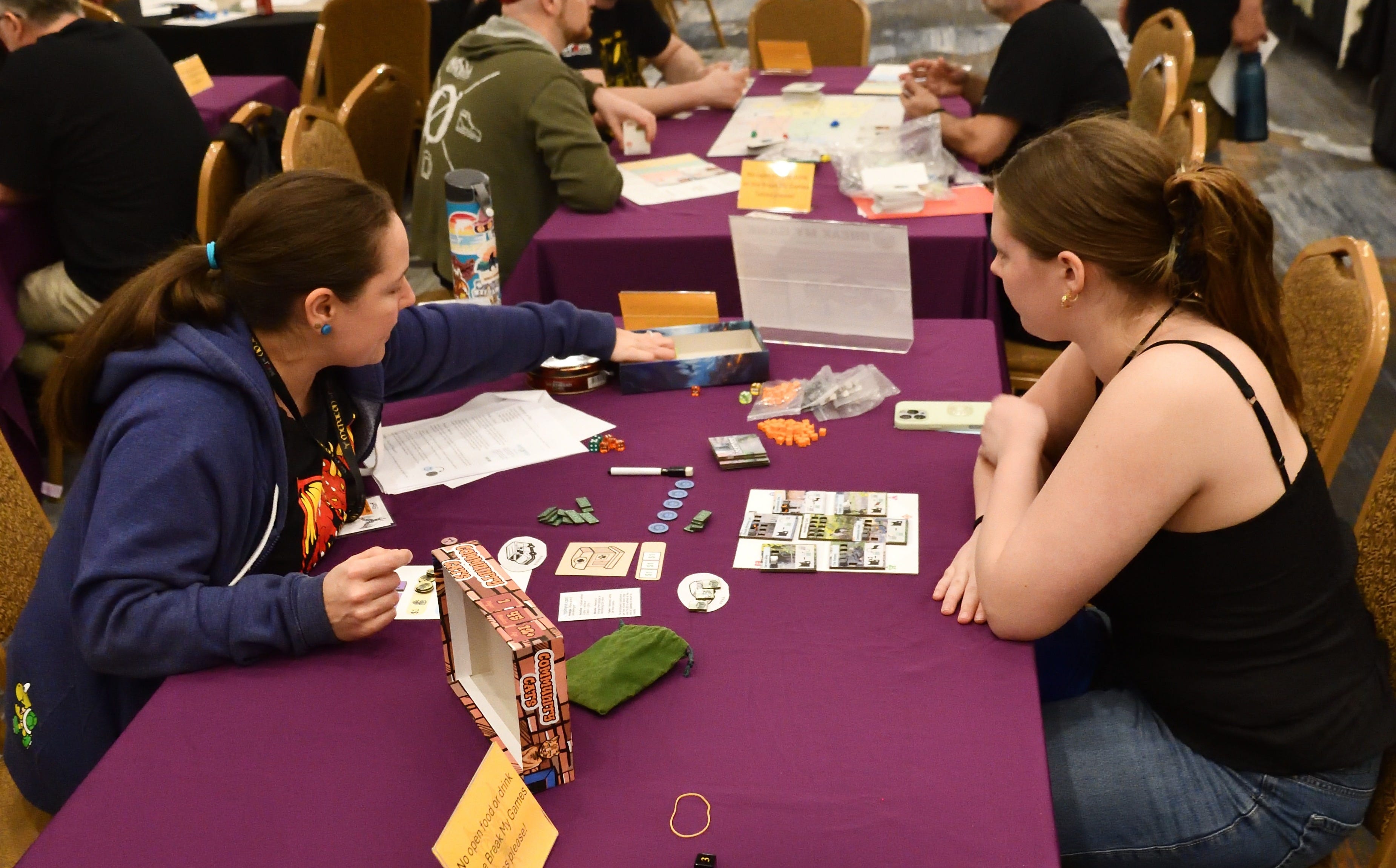
Originally I started the game thinking I was going to make a print and play. It got a little too complicated for that, so I pivoted to thinking I’d approach publishers. But then I heard a panel at Unpub Festival that talked about a ‘third way’ for game publishing that involves small batch self-publishing. The idea is that you create 25-50 copies of the game for sale at conventions or game markets. Indie Games Night Market at PAX and Lunar Punks’ Midnight Market are some great examples. I am currently exploring ways I can create Community Cats on my own.
Stay Tuned
I have a lot more to cover about Community Cats, but I wanted to give readers a foundation on the game for when I inevitably write another article about it. If you want to stay informed, subscribe to Mind Midden to keep getting updates about my games like Community Cats.